Acquiring a high-quality staple in Ladies Plus Size Leather Jackets is about more than just finding the right dimensions; it is an exercise in sourcing a garment that offers architectural integrity, material luxury, and a silhouette that commands authority. In the fashion landscape of 2026, the transition from “disposable” trend-wear to “generational” investment pieces has become a defining movement for the discerning buyer. A premium leather jacket is a biological fabric that records the history of the wearer’s life in its unique creases and deepening patina. However, for those navigating the plus-size market, the challenge often lies in finding manufacturers who prioritize high-spec tailoring over simple proportional scaling. This guide provides a technical blueprint for identifying a piece that functions as a permanent wardrobe anchor.
Material Science: Prioritizing Hide Grade and Fluidity
The longevity and aesthetic evolution of any leather garment are fundamentally dictated by the quality of the raw material. For curve-conscious silhouettes, the density and “drape” of the leather are critical.
Full-grain leather is the gold standard. It utilizes the outermost layer of the hide, where the fibers are at their most dense and durable. Because the natural grain remains uncorrected by sanding or buffing, full-grain leather is exceptionally resistant to puncturing and abrasion.
For a more polished, “buttery” aesthetic, top-grain lambskin serves as a high-quality alternative.
The Architectural Fit of Ladies Plus Size Leather Jackets
The most common failure in mass-market manufacturing is the “proportional scaling” trap—where brands simply widen straight-size patterns without adjusting for three-dimensional curves. True luxury tailoring involves re-engineering the garment from the ground up.
The most critical measurement in this construction involves the “Scythe” (the armhole). In high-end tailoring, the armhole is cut high and tight to the underarm. This ensures that when you raise your arms, the body of the jacket remains anchored to your torso rather than lifting up awkwardly and creating a “batwing” effect. Furthermore, strategic bust darts and princess seams are necessary to allow the leather to transition from the chest to the waist gracefully. This architectural approach ensures that the jacket provides structure and definition rather than simply acting as a heavy cover.
Mechanical Integrity: Zippers and Industrial Components
The hardware of a jacket serves as its mechanical DNA. Because leather is a heavy material, the closures are under constant lateral tension, especially when layering for colder climates. A plastic zipper or a cheap zinc alloy puller is a guaranteed failure point. When selecting a piece, one must demand industrial-grade metal hardware from globally respected manufacturers like YKK (specifically their Excella or brass lines), Riri, or Lampo.
These feature polished teeth that glide smoothly and provide a substantial metallic weight that resists oxidation. Furthermore, ensure that all snaps and buckles are crafted from solid brass or stainless steel. Hardware should be treated as jewelry for the garment; it should yield a firm, audible “click” when fastened and should never rattle or feel hollow. As regional fashion observers at LondonNews.store have noted, the shift toward “slow fashion” has reinvigorated interest in these durable components, as they are the difference between a jacket that lasts three years and one that lasts thirty.
Silhouette Selection and Visual Balance
The modern market offers diverse silhouettes, but for the plus-size consumer, the choice of style should align with both functional needs and aesthetic goals.
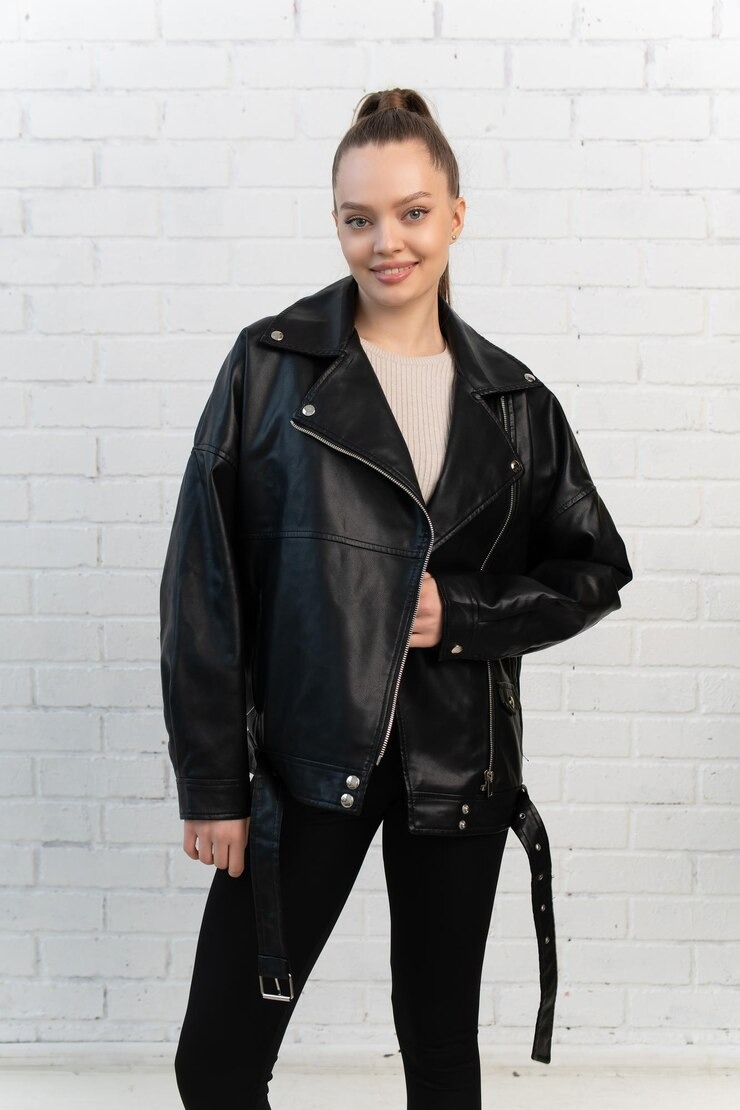
The classic Biker or Moto jacket remains a favorite for its asymmetrical zipper. On the other hand, the Minimalist Racer or Bomber offers a cleaner, more streamlined aesthetic.
When evaluating Ladies Plus Size Leather Jackets, pay close attention to the hemline. A jacket that hits precisely at the hip bone or slightly above it usually provides the most balanced proportions, as it allows the leather to define the waistline without adding bulk to the lower half of the body.
Internal Engineering: Lining and Breathability
While the exterior hide projects status, the internal architecture determines the actual daily utility. A common failure in lower-tier garments is the use of non-breathable polyester linings.
Premium-tier construction instead utilizes Cupro or Bemberg linings. These are regenerated cellulose fibers that are stronger than silk, highly breathable, and anti-static. A high-quality lining allows the jacket to glide effortlessly over wool sweaters or mid-layers without bunching.
Long-Term Maintenance and Hide Preservation
Since leather is a biological material, its fibers require consistent hydration to remain supple and prevent the protein structures from becoming brittle. To maintain the integrity of the garment, the hide must be treated once or twice a year with a premium, silicone-free conditioner. This process replenishes the natural oils lost to the environment and maintains the water-resistant barrier.
If the jacket gets caught in a heavy rainstorm, it is vital to avoid direct heat sources. Instead, wipe off the excess moisture and let it air-dry at room temperature on a wide, padded wooden hanger. This ensures the shoulders do not “pimple” or lose their architectural shape while the hide reaches its natural equilibrium. Proper storage in a breathable garment bag (never plastic) is also essential to prevent mold growth in humid environments.
Finalizing the Selection
Ultimately, the decision to move beyond disposable fashion is a commitment to valuing craftsmanship over convenience.
Acquiring one of the many high-end Ladies Plus Size Leather Jackets currently available in the luxury sector is an investment in functional history—a tool that organizes your professional image while providing a tactile pleasure and protective barrier that only increases in value with time.