Introduction
The logistics industry is evolving rapidly with the rise of eCommerce, global trade, and customer expectations for faster deliveries. Traditional methods of managing transportation, inventory, and supply chains are no longer sufficient. Businesses now need advanced, data-driven solutions to stay competitive.
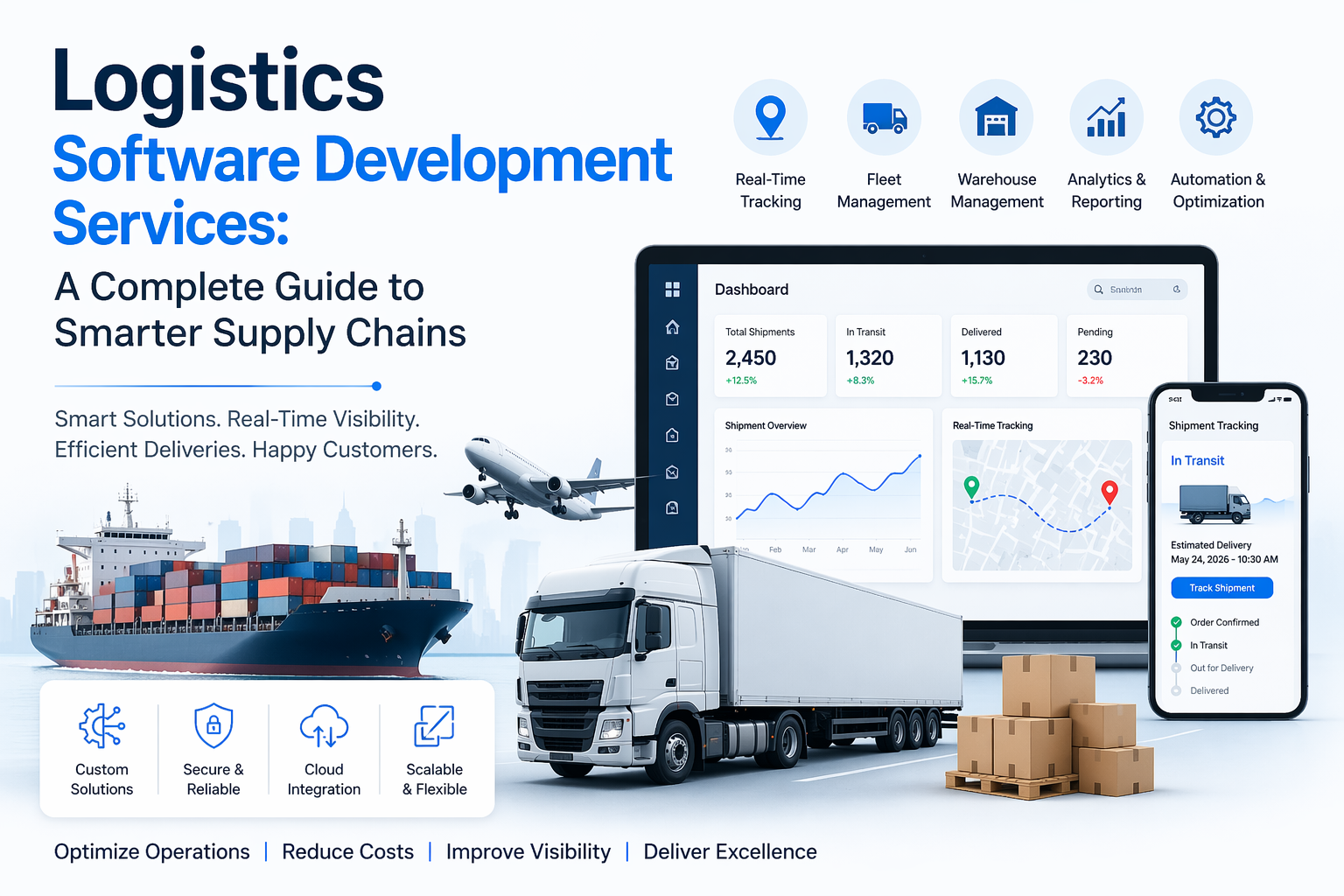
This is where logistics software development services come into play. From real-time tracking to automated warehouse operations, modern logistics software helps companies streamline processes, reduce costs, and improve overall efficiency.
In this blog, we’ll explore everything you need to know about custom logistics software development, its benefits, features, technologies, and how it can transform your business.
What Are Logistics Software Development Services?
Logistics software development services involve designing and building digital solutions that manage logistics operations such as transportation, warehousing, inventory, and order fulfillment.
These solutions are tailored to meet specific business requirements and can include systems like:
- Transportation Management Systems (TMS)
- Warehouse Management Systems (WMS)
- Fleet Management Software
- Supply Chain Management (SCM) Software
- Order Management Systems (OMS)
The goal is to create efficient, scalable, and automated logistics systems that improve operational performance.
Why Logistics Software Is Essential for Modern Businesses
1. Rising Customer Expectations
Customers expect faster and more accurate deliveries. Logistics software ensures real-time updates and efficient order fulfillment.
2. Complex Supply Chains
Managing multiple vendors, warehouses, and delivery channels requires automation and centralized control.
3. Cost Optimization
Manual processes increase operational costs. Software solutions help optimize routes, inventory, and resources.
4. Data-Driven Decision Making
Advanced analytics provide insights to improve performance and forecast demand.
Key Features of Logistics Software
Real-Time Tracking
Track shipments, vehicles, and inventory using GPS and IoT technology. This improves transparency and customer satisfaction.
Route Optimization
AI-powered algorithms determine the fastest and most cost-effective delivery routes.
Inventory Management
Maintain optimal stock levels with automated tracking and alerts.
Warehouse Management
Efficiently manage storage, picking, packing, and shipping processes.
Fleet Management
Monitor vehicle performance, fuel consumption, and driver behavior.
Order Management
Track orders from placement to delivery with complete visibility.
Analytics & Reporting
Gain insights into operations with detailed reports and dashboards.
Types of Logistics Software Solutions
Transportation Management System (TMS)
Manages shipping operations, route planning, and carrier selection.
Warehouse Management System (WMS)
Optimizes warehouse operations and inventory control.
Fleet Management Software
Tracks vehicles, drivers, and maintenance schedules.
Supply Chain Management Software
Handles end-to-end supply chain processes.
eCommerce Logistics Software
Integrates with online stores for seamless order processing and delivery.
Benefits of Logistics Software Development Services
Improved Efficiency
Automation reduces manual errors and speeds up operations.
Cost Savings
Optimized routes and better resource management lower expenses.
Real-Time Visibility
Monitor shipments and inventory in real time.
Enhanced Customer Experience
Faster deliveries and accurate tracking improve satisfaction.
Scalability
Custom solutions grow with your business.
Competitive Advantage
Advanced technology helps you stay ahead in the market.
Technologies Powering Logistics Software
Modern logistics software relies on cutting-edge technologies such as:
- Artificial Intelligence (AI) & Machine Learning (ML) for predictive analytics
- Internet of Things (IoT) for real-time tracking
- Cloud Computing for scalability and remote access
- Blockchain for secure and transparent transactions
- Big Data Analytics for insights and forecasting
- GPS & Geolocation APIs for navigation and tracking
Latest Trends in Logistics Software Development
1. AI-Powered Automation
AI is transforming logistics with predictive analytics, demand forecasting, and intelligent route planning.
2. IoT-Enabled Smart Logistics
Connected devices provide real-time monitoring of goods and vehicles.
3. Cloud-Based Logistics Platforms
Cloud solutions offer flexibility, scalability, and cost efficiency.
4. Blockchain Technology
Ensures transparency and security in supply chain operations.
5. Autonomous Delivery Systems
Drones and self-driving vehicles are shaping the future of logistics.
How to Choose the Right Logistics Software Development Company
Choosing the right development partner is crucial for success. Here are key factors to consider:
Industry Experience
Look for a company with expertise in logistics and supply chain solutions.
Customization Capability
Ensure they provide tailored solutions based on your business needs.
Technology Expertise
Check their knowledge of AI, IoT, cloud computing, and modern frameworks.
Portfolio & Case Studies
Review previous projects to evaluate quality and innovation.
Support & Maintenance
Ongoing support is essential for updates and troubleshooting.
Client Reviews
Check testimonials for reliability and credibility.
Cost of Logistics Software Development
The cost depends on multiple factors such as complexity, features, and technology stack.
Estimated Cost Range:
- Basic logistics software: $10,000 – $30,000
- Mid-level solutions: $30,000 – $100,000
- Enterprise-level systems: $100,000+
Factors Affecting Cost:
- Number of features
- Integrations required
- Development time
- Team expertise
Why Businesses Are Investing in Logistics Software
Businesses across industries are adopting logistics software to:
- Improve supply chain visibility
- Reduce delivery time and costs
- Automate workflows
- Enhance operational efficiency
- Increase customer satisfaction
For sectors like eCommerce, retail, manufacturing, and transportation, logistics software has become a critical component of digital transformation.
Conclusion
Logistics software development services are revolutionizing how businesses manage supply chains and transportation operations. By leveraging technologies like AI, IoT, and cloud computing, companies can build smart, efficient, and scalable logistics systems.
Investing in custom logistics software solutions not only improves operational performance but also enhances customer experience and drives long-term growth. If you want to stay competitive in today’s digital landscape, adopting advanced logistics software is no longer optional it’s essential.